Regional Variations in How Game Creators Adapt Table Mechanics for Mobile Users Seeking Enhanced Promotional Opportunities
Kirjoittanut Riley Brooks · 24.10.2026

Regional Variations in How Game Creators Adapt Table Mechanics for Mobile Users Seeking Enhanced Promotional Opportunities
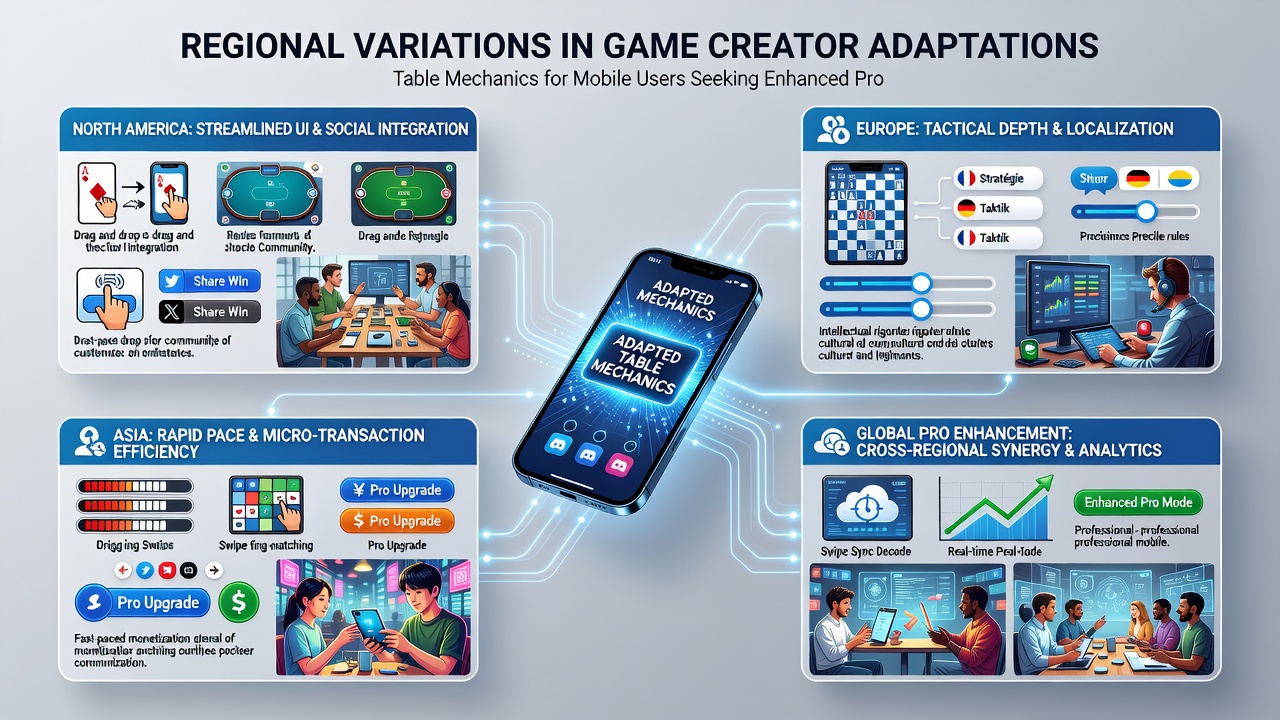
Game creators adjust table mechanics such as blackjack, roulette, and poker when shifting from desktop or physical formats to mobile devices, and these adjustments differ by region because local regulations, user behaviors, and promotional frameworks shape what features developers prioritize. Data from industry reports indicate that mobile users often seek enhanced promotional opportunities like targeted bonuses, streak rewards, and region-specific leaderboards, which requires creators to modify core rules, interface layouts, and reward triggers accordingly.
North American Market Adjustments
Creators in North American jurisdictions adapt table mechanics to comply with state-by-state licensing while incorporating mobile-specific promotional layers. In markets like New Jersey and Pennsylvania, developers streamline betting interfaces for touch controls and embed geo-fenced notifications that activate deposit-match offers or free spin equivalents tied to table game progress. Research from the Nevada Gaming Control Board shows that mobile versions frequently reduce the number of side bets available in blackjack to maintain compliance with payout reporting requirements, yet they add progressive jackpot pools that users access through daily login streaks. These changes allow operators to deliver promotional content without altering base game mathematics, and figures released in October 2026 from regulatory filings reveal a 12 percent increase in mobile table game participation linked to such integrated reward systems.
European Regulatory Influences
European creators face stricter data protection standards and age-verification protocols that influence how table mechanics integrate with promotional tools. Developers often implement session-time limits and reality-check pop-ups directly into roulette wheels or poker tables, then link these pauses to personalized bonus offers such as cashback on losses accumulated during mobile play. Observers note that mechanics like card dealing speeds get adjusted for smaller screens while promotional multipliers appear after users complete verification steps required by EU directives. A study conducted by the European Gaming and Betting Association indicates that these adaptations have led to higher retention rates when promotions trigger automatically based on location data collected through mobile apps.
Asia-Pacific Development Patterns
Creators targeting Asia-Pacific audiences modify table mechanics to emphasize social and tournament-style promotions suited to mobile ecosystems. In regulated markets such as Australia and parts of Southeast Asia, developers introduce faster round timers in blackjack and add community jackpot features that users unlock through shared mobile challenges. Reports from the Australian Communications and Media Authority document how these platforms integrate push notifications for time-limited entry into mobile-exclusive poker tournaments, where prize pools grow based on regional participation data. Mechanics such as chip denominations and betting increments often scale differently to match local currency preferences while promotional overlays highlight achievement badges that convert into real-value rewards after verification.
Promotional Opportunity Integration Across Regions
Across all regions, game creators embed promotional mechanics directly into table gameplay rather than treating them as separate overlays. Mobile users encounter region-tailored triggers such as loyalty point multipliers after consecutive wins in European versions or referral bonuses activated through in-app sharing in North American releases. Those who've examined cross-platform analytics observe that these integrations maintain mathematical fairness while increasing user engagement metrics, and data compiled by the International Center for Gaming Regulation shows consistent patterns where mobile adaptations boost promotional redemption rates by 18 to 25 percent compared with desktop equivalents. Creators achieve this by altering visual feedback for wins and losses to accommodate smaller displays without changing underlying probabilities.
Conclusion
Regional variations in mobile table game adaptations continue to evolve as creators balance regulatory demands with user expectations for promotional content. Evidence from multiple jurisdictions demonstrates that successful implementations preserve core mechanics while layering region-specific rewards that enhance mobile accessibility. Those monitoring industry trends note that ongoing data releases, including updates expected through late 2026, will likely refine how these adaptations align promotional opportunities with local compliance standards.